

New Discovery of Critically Endangered Cycad Spurge on Kariega Game Reserve


 (no comments)
Rare Botanical Discovery on Kariega’s Hilltops
There are few moments in conservation as exciting as discovering a species thought to be disappearing from the wild, especially in a place where nobody expected to find it.
High on the rocky hilltops of Kariega Game Reserve, a remarkable and critically endangered plant species has recently been discovered thriving in small, hidden populations. What began as a routine alien vegetation clearing operation has become one of the reserve’s most significant recent botanical discoveries, and a powerful reminder that conservation is about far more than the wildlife we usually see on safari.
Endangered Species at Kariega Game Reserve
Kariega Game Reserve is home to an extraordinary diversity of life, with 1,251 species currently recorded across its varied ecosystems. Of these, 85 species are recognised under some form of conservation protection, highlighting the reserve’s critical role in safeguarding South Africa’s natural heritage. A total of 34 species are listed under both the IUCN Red Data List and South Africa’s Threatened or Protected Species (TOPS) legislation, while a further 8 species are protected only under TOPS and 43 species appear exclusively on the Red Data List.
Among Kariega’s most vulnerable species are several classified as Critically Endangered, including black rhino, white-backed vulture, estuarine pipefish, Hottentots boegoe, and the newly discovered Euphorbia bupleurifolia population found on the reserve’s hilltops. Other endangered species protected within Kariega’s landscapes include mountain reedbuck, martial eagle, dusky kob, white steenbras, Albany adder, the Inquieta spiny-backed spider, Cape dwarf eelgrass, and Eastern Province rocky vegetation species. Together, these species reflect the immense ecological importance of Kariega’s ongoing habitat restoration, biodiversity monitoring, and conservation management efforts.
A Hidden Treasure Among the Rocks
During an alien clearing operation targeting invasive red-eyed wattle, one member of the team noticed something unusual growing amongst the rocky slopes, a plant unlike anything else in the surrounding landscape.
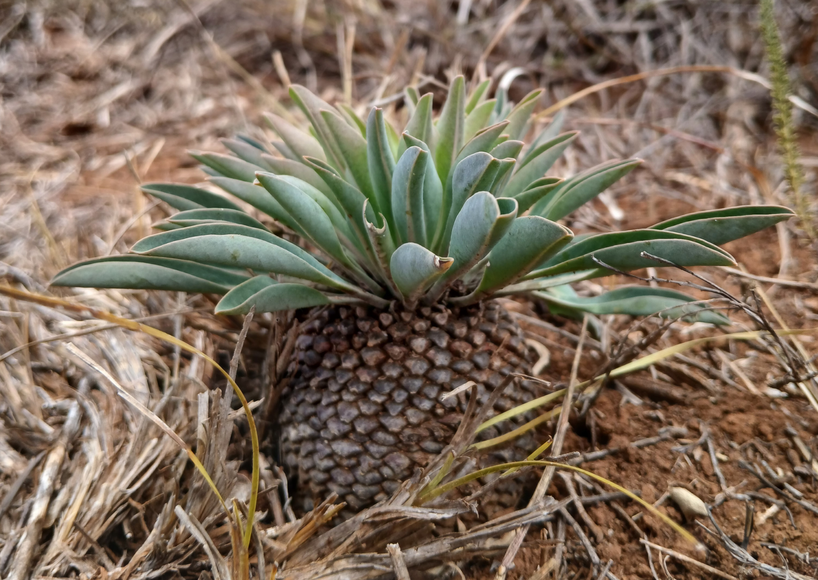
A quick photograph uploaded to iNaturalist initially seemed like a simple curiosity. But the following day, the identification returned with astonishing news, the plant was the critically endangered Cycad Spurge, scientifically known as Euphorbia bupleurifolia.
Meet the Cycad Spurge
Known locally as Inkamamasane, Insema, and Melkbol, the Cycad Spurge is one of South Africa’s most fascinating succulent species. Compact and sculptural in appearance, the plant resembles a miniature pinecone crowned seasonally with a tuft of leaves.
Adapted to survive harsh, sun drenched environments, the species stores water reserves within its thickened stem and can persist in exposed rocky habitats where few other plants survive. Slow growing and exceptionally specialised, these plants are true survivors of the Eastern Cape landscape.
Unfortunately, despite this resilience, the species is now listed as Critically Endangered on the SANBI Red List of South African Plants. Populations have declined dramatically due to illegal collection for the international succulent trade, harvesting for traditional medicine, habitat degradation, and invasive species pressures.
Conservation Beyond the Big Five
When people think of conservation at Kariega, iconic species such as black rhino, elephant, cheetah, and lion often come to mind. But true conservation goes far deeper than protecting individual animals.
Every ecosystem depends on a complex web of plants, insects, waterways, soils, and habitats working together in balance. Species like the Cycad Spurge are an essential, and often overlooked, part of that biodiversity.
This discovery highlights why habitat protection is so important. By protecting entire ecosystems rather than focusing on single species alone, conservation areas create safe spaces not only for large mammals, but also for rare plants, reptiles, insects, birds, and countless other organisms that sustain healthy wilderness systems.
The Bigger Picture: Expanding and Restoring Wilderness
The discovery of these endangered plants is closely linked to Kariega’s ongoing habitat restoration and expansion efforts.
Alien clearing operations, particularly against invasive species such as Red-eyed wattle, are critical for restoring natural biodiversity and reducing pressure on indigenous ecosystems. In this case, conservation work aimed at improving habitat health directly led to the discovery of a species previously unknown from the reserve.
Kariega Foundation’s broader habitat expansion vision focuses on:
- Expanding protected wilderness areas
- Restoring degraded landscapes
- Reconnecting fragmented habitats
- Protecting biodiversity at every level
- Building resilient ecosystems for future generations
These efforts already support threatened species including black rhino, estuarine pipefish, elephant, cheetah, and many other vulnerable plants and animals across the Eastern Cape.
A Reminder Hidden in Plain Sight
Guests enjoying a sundowner stop on Kariega’s hilltops are often captivated by sweeping valleys, golden light, and wildlife silhouettes on the horizon. Yet some of the reserve’s most extraordinary stories are found much closer to the ground.
The discovery of the Cycad Spurge serves as a powerful reminder that conservation is not only about the animals we see, it is also about protecting the hidden species, fragile habitats, and intricate ecosystems that make wilderness possible.
Sometimes, the greatest discoveries are the ones hidden quietly beneath our feet.
How You Can Help Protect Species Like the Cycad Spurge
Conservation success stories like this are only possible through long-term habitat protection, restoration work, and ongoing biodiversity monitoring. By supporting the Kariega Foundation, you become part of the effort to safeguard not only iconic wildlife such as rhino and elephant, but also the countless hidden and endangered species that quietly sustain healthy ecosystems.
There are many ways to get involved:
- Support habitat restoration and alien vegetation clearing initiatives
- Donate towards biodiversity conservation and species monitoring projects
- Volunteer with conservation and environmental programmes
- Raise awareness about the importance of protecting threatened species
- Visit and experience conservation in action at Kariega Game Reserve
Every contribution helps protect fragile ecosystems, expand wilderness areas, and secure a future for endangered species like the Cycad Spurge and the many other rare plants and animals that call Kariega home.
To support the Kariega Foundation or learn more about our conservation initiatives, visit www.kariegafoundation.com.
 Call us
 Email us